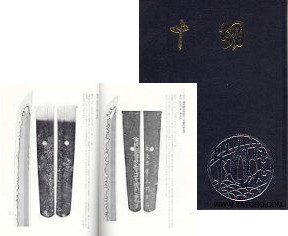
THE
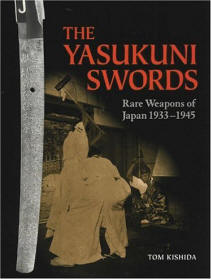
YASUKUNI SWORDS:
RARE
WEAPONS OF JAPAN 1933-1945
Tom Kishida, translated by
Kenji Mishina (2004)
English language translation of
Yasukuni-To: Tradition and Ideal Beauty (1998); the definitive
reference on the swordsmith group founded in 1933 at the Yasukuni
Shrine by the Japanese War Ministry. The forge produced the tamahagane
required for traditionally made swords while its smiths created some of
the finest example to be made during the period -- many of the blade
reminiscent of earlier masterworks. A very high quality
publication with excellent oshigata and vintage
b&w photos. A must for those interested in Gendaito.
155 pages, 10½" x 7¾" hardcover |
 |
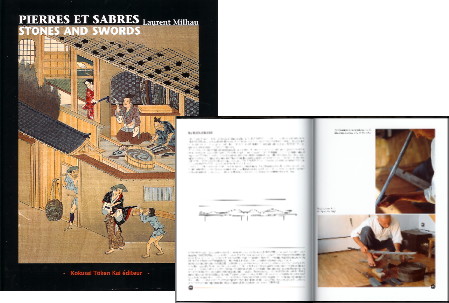
PIERRES ET SABRES:
STONES AND SWORDS - The Restoration of Japanese Art Sword Blades
Laurent Milhau (1999)
With full text in both French and English, Milhau demonstrates the art and
complexity of sword polishing. For those fascinated by
The Crafts of the Japanese Sword,
this text furthers the examination of the togishi
- sword polisher's - art. With color photographs and detailed descriptions
of each stage of the polishing process, this is the only text of its kind for
delivering an understanding of both the mechanics and theory of art sword
polishing.
96 pages, 8¾ x 11¼" hardcover |
 |
|
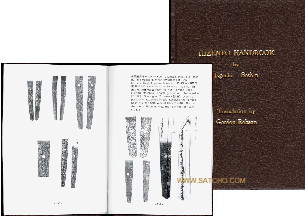
HIZENTO
HANDBOOK
EGUCHI Soshin, G. Robson, trans. (2003)
English translation of Hizento Hikke originally
published in conjunction with a major exhibit. Here, with
careful translation, an examination of the first generation Tadayoshi
is followed by overview of traits characteristic to the school and the
prolific line of smiths producing blades throughout the shinto
and into the shinshinto eras.
Essential, high-level study material made accessible to
English-language readers.
318 pages, 7¼ x 10¼" hard cover
|
 |
|
|
YOSHINDO YOSHIHARA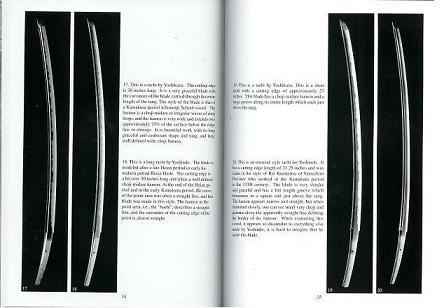 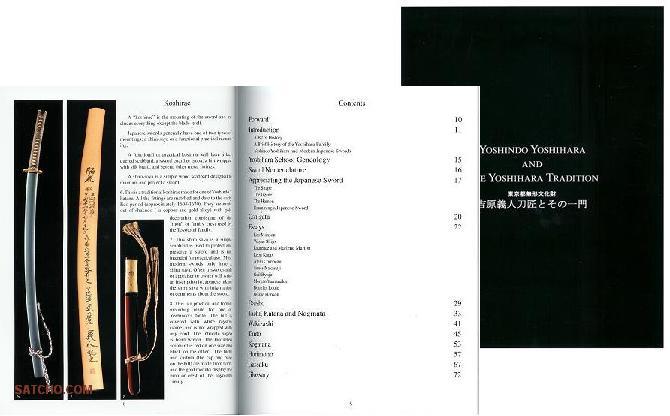
and THE YOSHIHARA TRADITION
San Rafael Token Benkyo Kai: L. Kapp, Editor (2005)
Sixty-eight examples are presented in this catalog prepared in anticipation of
the important 2005 Pacific Asia Museum exhibit, and the recognition of Yoshindo
Yoshihara as Important Intangible Cultural Property of Tokyo. Includes essays,
genealogy, diagrams, glossary, 74 black & white, and 14 color plates. This
privately published catalog was a limited printing of 1000 copies.
72 pages, 8½ x 11" soft cover |
 |
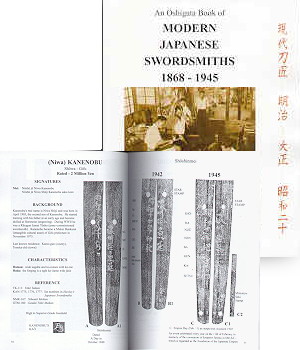
An Oshigata
Book of
Modern Japanese Swordsmiths:
1868-1945
John Slough
(2001)
This much anticipated work addresses the large gap present in sword
scholarship as related to gendai-to - modern Japanese swords of the
Shinshinto, and more specifically, W.W.II era. Includes excellent
oshigata and extensive documentation. Each smith
is referenced to his listing in Hawley's Japanese
Swordsmiths, Toko Taikan, and the
Shinto volume of Nihon Toko Jiten. This high
quality publication is further supported by vintage b&w photos,
period advertisements and exhibition results. With very few entrants to
this specific field of study, this English language work is a must for those interested in
the study of Gendaito. The book was reprinted in 2004 as a hardcover while the
contents remained the same.
272 pages, 8½ x 11" soft cover |
 |
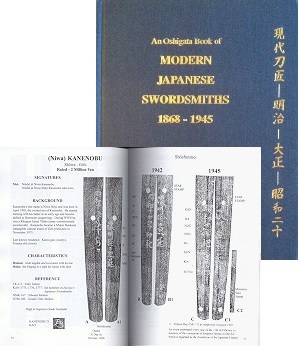
An Oshigata Book
of
Modern Japanese Swordsmiths: 1868-1945
John Slough
(2004)
This much anticipated work addresses the large gap present in sword scholarship
as related to gendai-to - modern Japanese swords of the Shinshinto,
and more specifically, W.W.II era. Includes excellent
oshigata and extensive
documentation. Each smith is referenced to his listing in Hawley's
Japanese Swordsmiths, Toko Taikan, and the Shinto volume of
Nihon Toko Jiten. This
high quality publication is further supported by vintage b&w photos, period
advertisements and exhibition results.
With very few entrants to this specific field of study, this English language
work is a must for those
interested in the study of Gendaito. The hardcover edition was
produced in 2004.
272 pages, 8½ x 11" hardcover |
 |
|
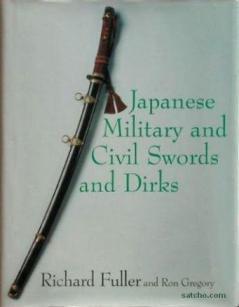
JAPANESE MILITARY AND CIVIL SWORDS AND DIRKS
R.Fuller, R.Gregory (1996)
A history and comprehensive reference on Japanese edged weapons in
military service. Though not a collection of oshigata,
it provides the most current information on swords of the period
including: a reappraisal of arsenal and retailer's stamps, and an
expanded classification of blade-making methods in order of merit.
288 pages, 7¾ x 10" hardcover
|
 |
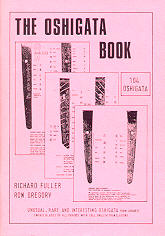
THE OSHIGATA BOOK
R.Fuller, R.Gregory (1985)
Subtitled, 'unusual, rare, and interesting oshigata
from Japanese sword blades of all periods.' This reference
text delivers an excellent collection of oshigata
categorized into variations on the conventional practices of name,
place, date to instead address examples of special order,
presentation, and tameshigiri
(cutting-test) inscriptions to name a few of the categories.
Examples are shown with full English and Japanese translations.
144 pages, 5¾ x 8¼" soft cover |
 |
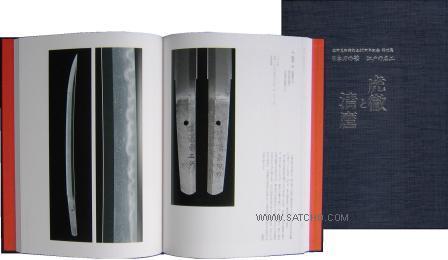
The 40th Anniversary of
Sano Art Museum, Special Exhibition -
THE FLORES OF JAPANESE SWORD MASTERS OF THE EDO
PERIOD: KOTETSU AND KIYOMARO
(Sano Museum, 2006)
Bringing together masterworks of the Shinto and Shinshinto
eras, this catalog presents seventy-one examples in a large format
reference. This special printing in commemoration of the
museum's 40th anniversary sold out quickly. Accessible to
non-Japanese readers with its English-language index that includes transcription
of mei in romanji and
measurements. Each sword is shown in full-color photographs
detailing the workmanship that made Kotetsu and Kiyomaro the most
influential smiths of their time.
159 pages, 8½ x 11½ hardcover with
slipcase |
 |
|
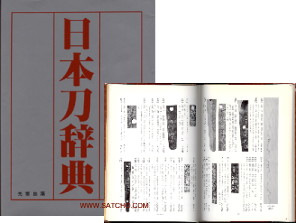
NIHONTO JITEN
TOKUNO Kazuo (1973)
From the author
of the well known Toko Taikan (1977), this book bares distinction as
its 110 pages of oshigata of important smiths of the
Koto through Gendai
periods has been made accessible to English-language users through the JSS/US'
Index of Sword Literature
- a testament of its utility as a tool of study. Further, the
oshigata
here are of higher quality than seen in the 1977 text because of its larger
size. Like the later work, this Japanese-language reference includes
biographical information for each listed smith, and cites relative Yen values
for comparison. Also included is a separate English-language listing of the
oshigata
with index numbers to Hawley's Japanese Swordsmiths; this index allows
the book to stand on its own.
263 pages, 7¼ x 10¼" hardcover
|
 |
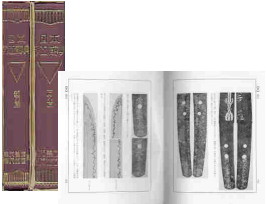
日
本刀工辞典
NIHON TOKO JITEN
FUJISHIRO Matsuo (r.1964)
The classics Japanese-language sword reference. This
reference set includes detailed oshigata and
information of the most important smiths of the Koto
and Shinto periods. Long
considered essential texts, Fujishiro's rankings are a common reference
of collectors and scholars alike, and serves as one of the key texts
cited in Hawley's
Japanese Swordsmiths. Included separately is Fujishiro's
English-language index promoting accessibility for non-Japanese readers. A two volume set: Koto
and Shinto.
Two 6¼ x 8¾" hardcover volumes |
 |
NIHON TOKO JITEN -
English Translation
A full English translation of
Fujishiro's classic with additional supporting material. Here the English reader
is offered an opportunity for study as presented in no other text. Fujishiro's Nihon Toko Jiten is
made fully accessible when supplemented by this English translation; an
important tool for study and obvious value to serious collectors. A two volume set:
Koto
and Shinto.
Two 8¼ x
11" hardcover volumes |
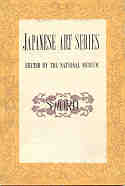
JAPANESE SWORD
HOMMA Junji (1948)
During Allied Occupation the National Museum
of Japan held an important exhibition of Japanese Swords. This English-language
text provided an overview of the history of swords in Japan. Be advised
that it does not include photos or oshigata; its illustrations are directed
toward sword nomenclature. What it does include is Homma's excellent and
extensive essay, "Works of Art Made of Steel," which can easily serve as a basis
for serious study.
72 pages, 5
x 7¼" paper hardcover |
 |
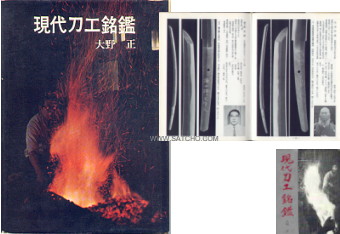
GENDAI TOKO MEIKAN
Ono Tadashi (1971)
One of the very few early references specifically focused on Gendai
period swords and smiths. Includes oshigata
and biographical information on over 200 of the top gendai smiths
written in Japanese. While this is a Japanese language text,
it is accompanied by an English index, and has been indexed in the
JSS/US Index to Japanese Sword Literature.
262 pages, 6 x 8½" hardcover + English index |
 |
|
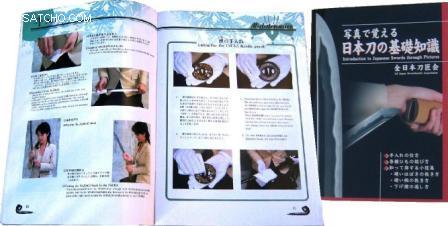
INTRODUCTION TO JAPANESE SWORDS THROUGH PICTURES
All
Japan Swordsmith Association
Illustrated step by step instruction for cleaning and etiquette.
Diagrams of production, koshirae variations, and sageo
tying with descriptions in English and Japanese.
48 pages, 8¼ x 11¾" soft cover
|  |
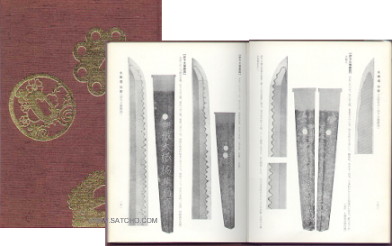
SHINTO SHU (Hamon
To Meiji)
FUJISHIRO Yoshio (r.1955)
An
important shinto reference accompanied by a
separate English translation and index. Oshigata
and extensive descriptions. The oshigata
included are cross-referenced to Shinto Taikan,
Hawley, and Fujishiro's Nihon Toko Jiten Shinto-hen.
223 pages, 7½ x 10½" hardcover / plus separate
68 page English translation, Cross-Reference and Index
|
 |
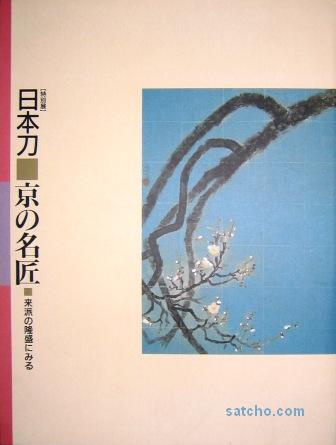
RISE AND PROSPERITY OF THE MASTERFUL RAI SCHOOL OF KYOTO
Sano Museum (1999)
This exhibition catalog surveys the Rai school drawing from private and public
collections. Accessible to non-Japanese readers with its detailed, 4-page
English-language index. Includes 47 blades; each shown in b&w photograph and
traditional oshigata
format. Inscriptions are further detailed in a useful seven page appendix.
129 pgs, 8¾ x 11¾" soft cover |
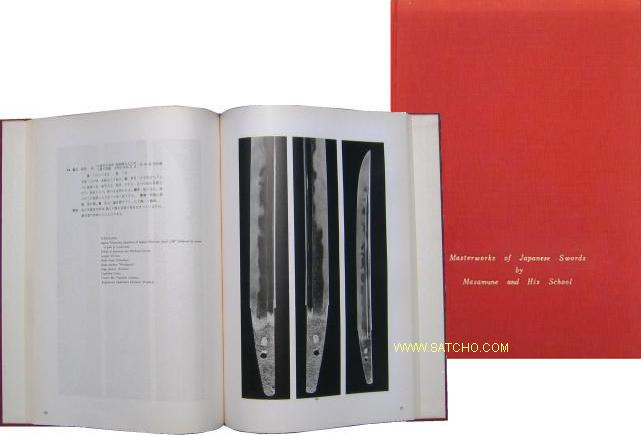
MASAMUNE TO SONO ICHIMON:
Masterworks of Japanese Swords by Masamune and his school
NBTHK (Homma, 1961)
Beginning with a twenty-seven page essay on the "Swordsmiths of Sagami
province with special reference to Masamune and his school" in both
English and Japanese, this important text presents an assembly of Soshu
school works including many Juyo Bijutsuhin
(Important Art Objects protected from export) with large format oshigata
in multiple perspectives as shown at right. Bilingual -
Japanese and English - text throughout.
193 pages, 10¼ x 14½" hardcover
|
 |
MINO-TO: Swords
& Swordsmiths of Mino Province
M.E.Cox
The definitive English language reference on Mino swords; covers koto
through shinshinto examples. When
considered that of the Five Schools, the greatest number of swords can
be attributed to the Mino tradition - these are the swords that
collectors are most likely to encounter. Includes: historical
material, construction, evolution, lists of kaji,
groups, & over 100 pages of oshigata. A
separate 34 page supplement is also included.
268 pages, 8 x 11½" soft cover | 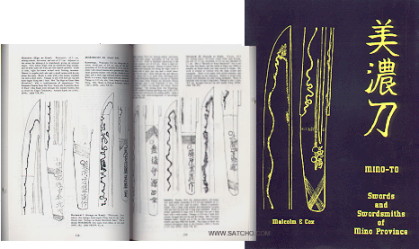 |
AUSGEWÄHLTE
JAPANISCHE KUNSTSCHWERTER
AUS EUROPÄISCHEN SAMMLUNGEN DER NBTHK
SELECTED
FINE JAPANESE SWORDS
FROM EUROPEAN N.B.T.H.K. COLLECTIONS
Hagenbusch et al, NBTHK
European Branch (2002)
Cataloging a landmark exhibition of fine Japanese swords, this well
organized text delivers 120 pages of expertly documented swords, 15
pages of koshirae shown in color plates, and an
extensive glossary that will serve even the experienced student of Nihon-to.
Also included is an in-depth study of Yagu tsuba, and
three essays: "Meito or What Makes a Masterpiece?"
and "Technology, Beauty, and the Soul of the Japanese Sword"
by Nobuo Ogasawara, and "The Japanese Sword" by
Michael Hagenbusch. Compares favorably with such classics as
the Boston Museum (Ogawa, 1987) and Compton exhibition (Japan Society,
1976) books. Full text in both English and German.
334
pages, 9¼ x 13¼"
hardcover | 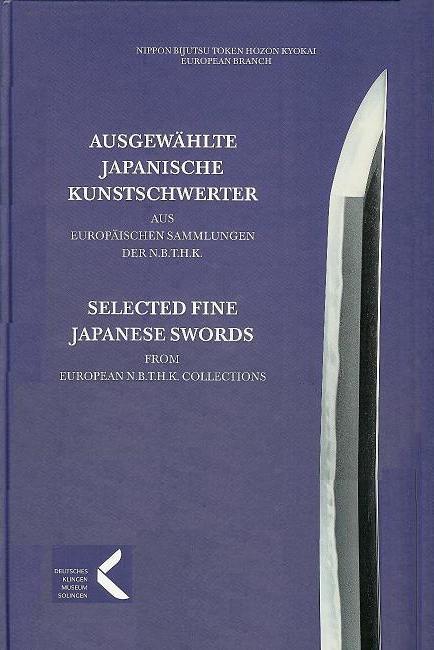 |
THE
SCHOOL OF TADAYOSHI:
SAGA, HIZEN, JAPAN 1598 - 1871
R.J.Robertshaw (1999)
The definitive book on Tadayoshi school and Hizen-to. As the
most prestigious school of swordsmiths whose work spanned the shinto
through shin-shinto periods, Robertshaw has assembled a landmark work
that is both concise while broad in scope. This ambitious
text delivers essential content which includes an in-depth history of
the individual smiths as well as exhaustive detail related to
kantei. Oshigata of all recognized
Tadayoshi is included along with consideration of gimei - false/fake
-examples. Extensive illustrations: both line drawing,
b&w, and color plates; bibliography, and index.
214 pages, "Gold Edition" 8½ x 12" hardcover with slipcase,
CD included. A limited, private printing of 200 editions. | 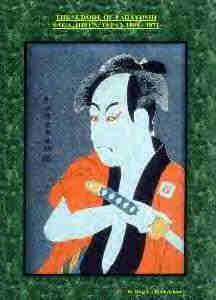 |
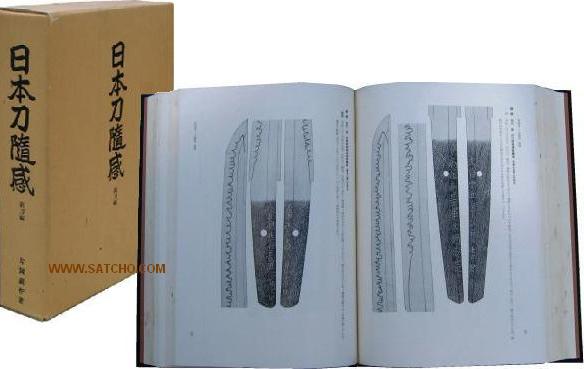
NIHONTO
ZUIKAN: SHINTO HEN
KATAOKA
Ginsaku (1984)
Japanese-language text with outstanding, large
format oshigata of Shinto and Shinshinto
period swords. A unique feature of this edition is that it
includes a seven page romanji index making its
contents accessible to non-Japanese readers.
1,067 pages, 8¾ x 11¾" hardcover, slipcase
|
 |
|
|
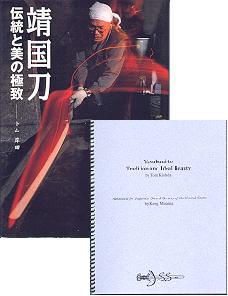
YASUKUNI-TO
TRADITION
AND IDEAL BEAUTY
Tom Kishida, translated by
Kenji Mishina (1998)
The definitive reference on the swordsmith group founded in 1933 at the
Yasukuni Shrine by the Japanese War Ministry. The forge produced the
tamahagane required for traditionally made swords while its smiths
created some of the finest example to be made during the period -- many
of the blade reminiscent of earlier masterworks. A very high
quality publication with excellent oshigata and vintage b&w
photos. A separate 145 page English translation of the entire
text is included. A must for those interested in Gendaito.
116 pages, 8� x 11�" soft cover
& separate English translation
|
 |
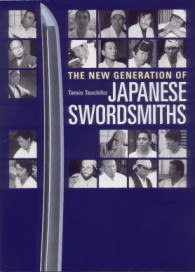
THE NEW GENERATION OF
JAPANESE SWORDSMITHS
TSUCHIKO Tamio (2002)
Twenty notable gendaito smiths define what makes
a "fine sword" while describing their personal aspirations with regards
to their art. This insightful work gives readers unrivaled
access to first-hand information on swordmaking theory and
process. A common theme throughout the text is
"Restoration". Here restoration refers to ongoing efforts to
emulate classic koto period
masterworks. Beyond biographies, Tsuchiko demonstrates an
active community of artists as each smith is shown interacting with
others; examples include polishers, patrons, and others.
In short, this book presents each smith's understanding of Nihonto
as realized thought a lifetime's immersion in its study and
creation. It is an essential text for all sincere students of
the sword - of all periods.
256 pages, 7¾ x 10¼" hardcover |
 |
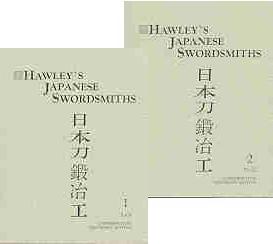
JAPANESE SWORDSMITHS
Commemorative Centenary Edition
W.Hawley
This is the latest revision of the indispensable English language
reference on Japanese swords. As the largest compilation of
swordsmiths, each listing includes: where and when each smith worked,
how they signed, and the relative value of their swords.
Hawley also indexes listings to oshigata in
Fujishiro's Nihonto Toko Jiten and Tokuno's Toko Taikan.. This Commemorative
Centenary Edition is completely re-photographed with
historical material revamped for easier reference of provinces, time
periods, and terminology.
1,032 pages in 2 volumes, soft cover
|  |
|
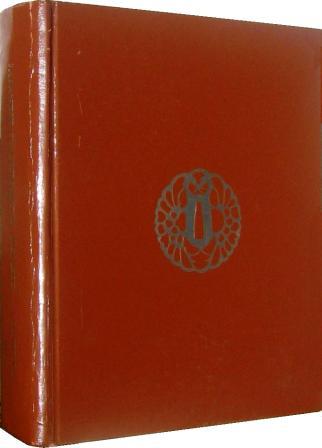
JAPANESE SWORDSMITHS
W. Hawley (1981)
Expanding on his 1967/68 publication this is Hawley's revised listing of
his indispensable English language
reference on Japanese swords. As the largest compilation of swordsmiths - the same listing as the later Centenary Edition in two
soft-cove volumes, each listing includes: where and when each smith worked,
how they signed, and the relative value of their swords. Hawley also indexes listings to oshigata in
Fujishiro's Nihonto Toko Jiten and Tokuno's Toko Taikan.
1046 pages, 9 x 11¼"
hardcover
|
 |
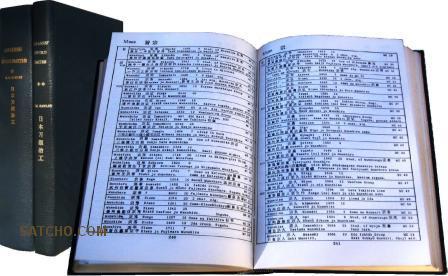
JAPANESE SWORDSMITHS
W.Hawley
(1967, 68)
Hawley's first English language listing of Japanese swordsmiths. Its
initial 1967 volume contained 13,500 names used by 12,000
smiths. With the second volume this was expanded to list
17,000 swordsmiths representing the largest compilation of its
time. Each listing includes: where and when each smith
worked, how they signed, and the relative value of their
swords. Hawley also indexes listings to oshigata
in Fujishiro's Nihonto Toko Jiten. While
including only a limited number of modern smiths as received study in
1960s Japan, this set has the index to the Juyo Token Nado
Zufu (volumes 1-17) that was later omitted from the 1981 and
final printings.
1248 pages in 2 volumes, 5¾ x 8" hardcover |
 |
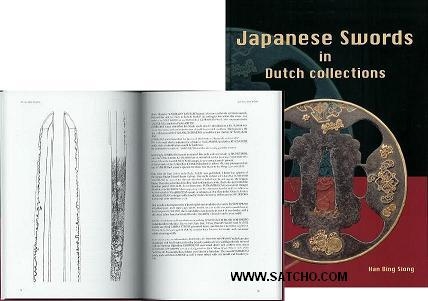
JAPANESE SWORDS IN DUTCH COLLECTIONS
Han Bing Siong (2003)
A detailed study of 85 fine blades published in commemoration of the
Netherlands Token Society's (De Netherlandse Token Vereniging)
twenty-fifth anniversary. The selected blades were drawn from
500 examples catalogued by the Society. Extensive commentary
drawing on the author's life's study accompany each work.
With traditional oshigata of each sword plus 18
b&w, and 23 color plates.
224 pages, 8¼ x 11¾" hardcover |
 |
MEIHIN KATANAEZU SHUSEI
TANOBE
Michihiro
(1999)
This spectacular book sold out of its sole, limited printing of 600
copies well before distribution. This definitive reference of
important swords contains 204 large format examples, with each example
taking up one page with oshigata and photographs. In addition, detail of mei are included, some with
additional comparisons. All oshigata were produced
by Tanobe Michihiro
(NBTHK). The blades are the
finest examples: kokuho, important cultural
property, art object and the like. The book itself is simply beautiful.
Double boxed, the book is tied with tape (ito) and
then stored in a two-fold, cloth covered folio that closes with pegs.
The large format provides unparalleled representation. In all, an
exceptional reference for the serious collector. An English
index is also included.
21½ x 14½"
bound folio with hardcover case, boxed | 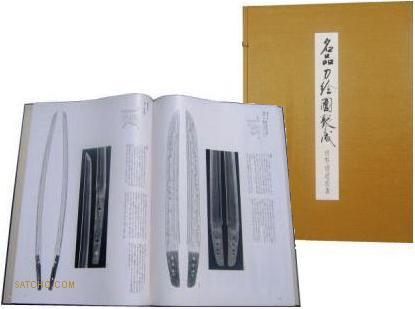 |
|
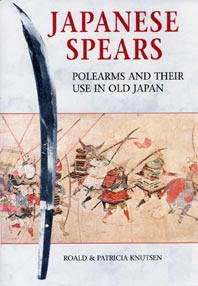
JAPANESE
SPEARS
Polearms and their use in Old Japan
Roald & Patricia Knutsen (2004)
Following Knutsen's landmark Japanese Polearms
(1963) is another study of "...the dominant weapons of the battlefield
until displaced by the widespread introduction of firearms in the late
16th century. This fully illustrated study of "naginata"
and "yari" records the many variations of spear
design from the ancient period when warrior chieftains settled in Japan
from the Asian mainland, down to the fall of the Tokugawa in 1868 that
marked the close of the feudal period."
288
pages, hardcover |
 |
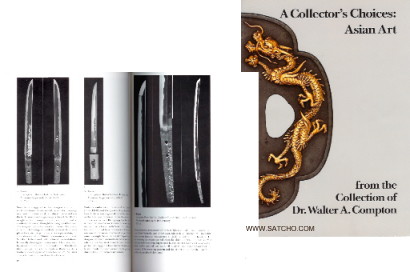
A COLLECTORS
CHOICES:
ASIAN ART FROM THE COLLECTION OF
DR. WALTER A. COMPTON
Yutaka Mino et al (1983)
Presentation of the Indianapolis Museum of Art, a special exhibit of
115 choice pieces which includes 8 blades, and 19 sword fittings from
the Compton Collection; the remainder comprising paintings, ceramics,
and textiles.
72 pages, 7 x 10" softcover |
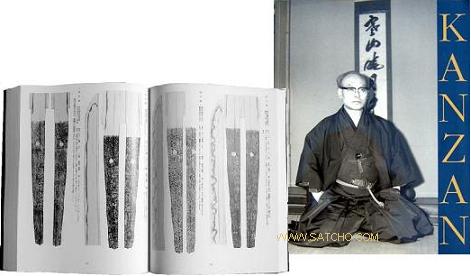
KANZAN
SHINTO OSHIGATA DICTIONARY
With
Romanization and English Forward
SATO
Kanzan (2005)
Published in commemoration of the late Dr. Kanzan Sato, this important shinto
reference has been reprinted with its entire contents indexed in
English. Full romanization of inscriptions and descriptive
text are included, fulfilling the scholar's intention of "publish[ing]
a book on swords in English that would be easy for overseas sword
lovers to understand".
502 pages, 9 x 11½" soft cover |
 |
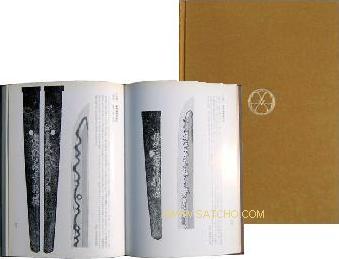
NIHONTO MEISAKU SHU
Shibata Mitsuo (1965)
This text presents a large collection of Japanese sword masterpieces,
with the an emphasis on Shinto and Shinshinto
works. Beautiful, traditional oshigata of the the
highest quality. Multiple perspectives, including nakago
and monouchi, for each blade are shown. Excellent
study material. Commentary and index in Japanese. A separate
English-language index is also included.
124 pages, 7¼ x 10½" hardcover |
 |
JUKKEN: Nihon Koto Meisaku Shu
Shibata Mitsuo (1967)
This Japanese-language text presents a large collection of Koto
period masterpieces shown in 130 pages of beautiful, traditional oshigata
of the the highest quality. Multiple perspectives, including nakago
and monouchi, for each blade are shown. Excellent
study material. Commentary and index in Japanese. A separate
English-language index is also included.
136 pages, 7¼ x 10½" hardcover w/slipcase |
 |
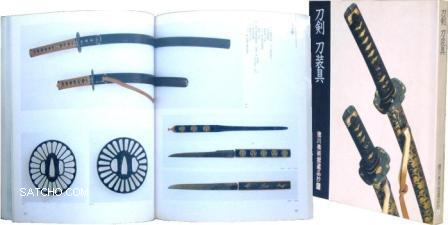
TOKEN TOSOGU,
TOKUGAWA BIJUTSUKAN ZOHIN SHO 6 -
Swords and Accessories, Treasures from the Tokugawa Art Museum No. 6
Tokugawa Art Museum (1992)
A collection catalog. The 180 examples presented include many important
blades primarily of Juyo to National
Treasure status (89 pages of oshigata),
sword fittings and koshirae, and many daisho.
High quality photography throughout and printing on gloss stock -- all
exhibits are shown in color with the exception of the blades which are
shown in b&w as is traditional. The unprecedented collection of
highest quality works includes a complete, 10-page English-language
index of exhibits affording access to non-Japanese readers.
197 pages, 8½ x 10½" soft cover |
 |
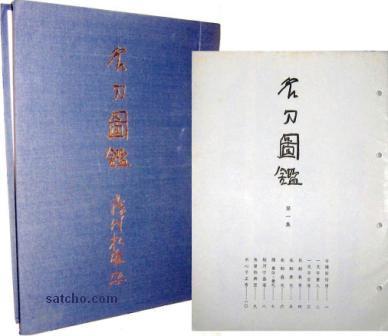
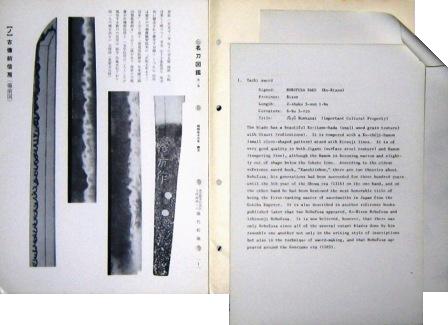
MEITO
ZUIKAN - CATALOG OF FINE SWORDS
FUJISHIRO Yoshio &
Matsuo (Published 1978 - 1993)
This complete twenty-eight volume collection accompanied by a separate
English translation and index presents detailed oshigata
with scholarly descriptions. Each journal includes ten
studies; important swords spanning Koto through Shinshinto
periods. Images printed on gloss stock for maximum clarity.
280+ pages, 7½ x 10½" journals retained between printed, cloth boards/
plus separate 280+ page English translation |
  |
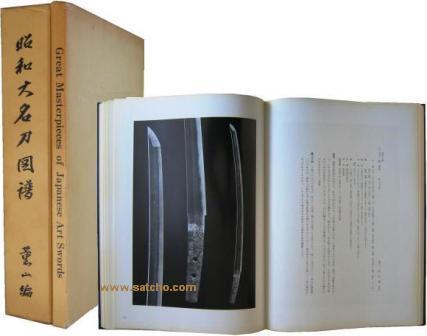
昭和大名刀図譜
SHOWA
DAI-MEITO ZUFU -
Great Masterpieces of Japanese Art Swords
(HOMMA Junji, 1979/82)
The authoritative two-volume presentation of 313 meito
- masterpieces as could only be assembled in Japan. Included is the
third volume, its English translation which was printed in limited
quantity.
780 total pages in three volumes, 10½
x 14½" hardcover, with slip case(s) |
 |
|
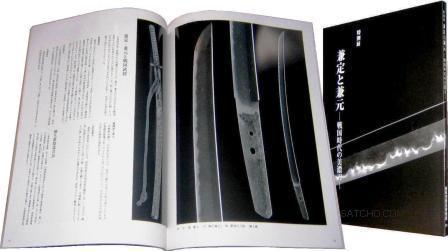
KANESADA AND KANEMOTO
Mino-To of the Sengoku Jidai
Gifu City Museum of History, Japan (2008)
Famed for their extreme sharpness; their works are rated o-wazamono.
This Japanese-language catalog details all 39 exhibited blades with
detailed photography followed by an illustrated glossary of kantei-points
and signatures. An important and welcomed reference on two
mainline Mino schools.
80 pages, 7½ x 11½" soft cover
|
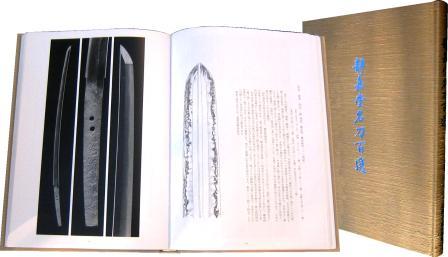
SEIKADO MEITO
HYAKU SEN
100 Masterpeices from the Seikado Bunko Art Museum (1992)
Exceptional documentation of the Seikado Bunko Art Museum's important
collection of nihonto. Prefaced by six
fine koshirae and four tsuba,
the one-hundred nihonto exhibits are expertly
recorded with both traditional oshigata and
photographs of sugata, nakago, and monouchi.
Readily accessible to non-Japanese readers; it includes a six-page,
English-language index that noting: attribution, transcription of mei
in romanji, school, period, province and length.
237 pgs., 8½ x 12" hardcover with slipcase |
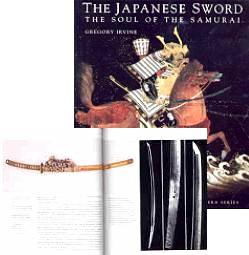
THE JAPANESE SWORD, The
Soul of the Samurai
Gregory Irvine (2000)
Drawing primarily from the
collection of the Victoria & Albert Museum (UK), this book
presents an 'illustrated survey [that] examines the development of the
Japanese sword in a social and historical context'. The
unique perspective of the text is well supported by high quality
photographs of swords, mountings, and prints throughout.
Photos are in color with the exception of sword blades as is
traditional. A beautiful work that belongs on the shelf of
every enthusiast.
128 pages, 8¾ x 10" hardcover |
 |
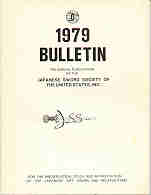
1979 BULLETIN:
The Annual Publication of the
JSS/US
JSS/US, R.Hartman,
Editor (1976)
Contains: Ko-tosho and Ko-katchuishi Tsuba, Japanese Matchlocks,
Torigoye's Introduction to Japanese Metalworks, Christie's Auction
(6/79) report with 13 important oshigata, '79 Taikai Report,
Explanation of Origami (certificates), and other articles.
80 pages, 8½ x10¾" soft cover |
 |
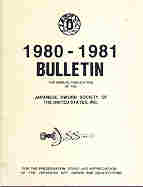
1980-1981 BULLETIN:
The Annual Publication of the
JSS/US
JSS/US, R.Hartman,
Editor (1982)
Contains: Ozawa Masatoshi - Master Swordsmith, A Brief History of
Japanese Sword Fittings, An Extremely Rare Blade by Shodai
Izumi-no-Kami Rai Kinmichi, Modern Tsuba-Ko in America, Characteristics
of the Oei Bizen Sword, The Hidden Spirit of a Fine Koshirae, On the
Study of Japanese Swords (Footnotes).
69 pages, 8½ x10¾" soft cover |
 |
|
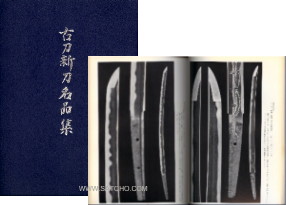
KOTO SHINTO MEIHIN SHU
NBTHK (1976)
"Koto
and Shinto Masterpieces," Japanese-language text presenting
158 exceptional blades of the koto and shinto
periods along with period koshirae(19) and sword
fittings(49).
187 pages, 8¾ x 12¼" hardcover with slipcase |
 |
|
|
|
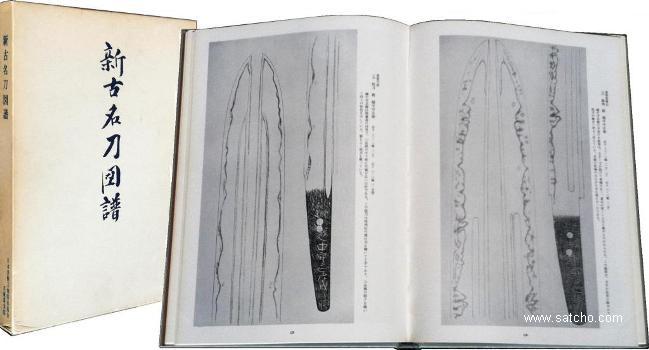
SHIN KO MEITO ZUFU
NTBHK Hyogo Shibu (1977)
This Japanese-language text presents 222 exceptional koto and shinto period swords with large format oshigata. Published one year after the NBTHK's
better known Koto Shinto Meihin Shu (1976), it is notable for including works not seen elsewhere.
225 pgs., 8¾ x 12¼" hardcover with slipcase |
 |
|
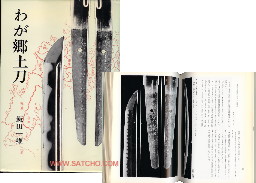
WAGA KYODO TO
IIDA Kazuo (1973)
A Japanese-language text with examples of swords produced throughout
Japan demonstrating wakimono - "country smith
work" that does not conform neatly to the Gokaden,
or five classical traditions. Numerous oshigata
throughout.
238 pages, 5¼ x 7½" hard cover
|
 |
|
|
|
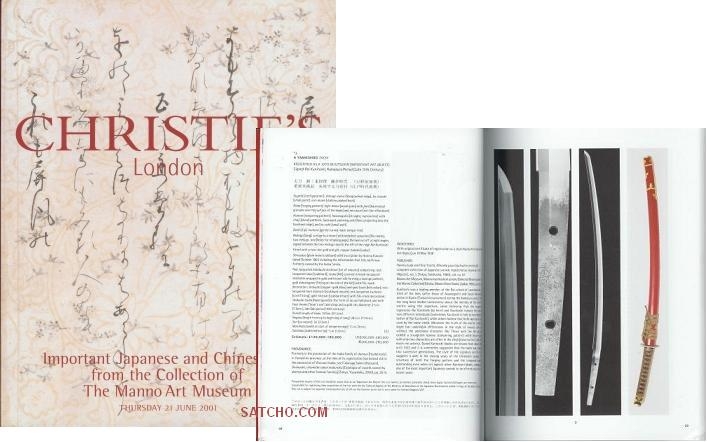
IMPORTANT
JAPANESE AND CHINESE ART FROM THE COLLECTION OF THE MANNO ART MUSEUM
(21 June 2001, London)
Christie's auction, includes 36 lots of Japanese arms and armor
including 4 Juyo Bijutsuhin (Important Art Objects
protected from export) and several ju-to; each lot
extensively documented.
85 pages, 8¼ x 10½" soft cover |
 |
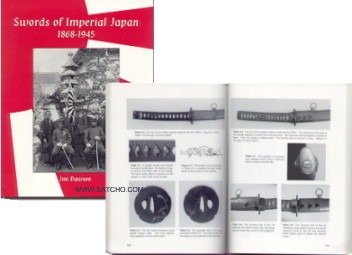
SWORDS OF IMPERIAL JAPAN:
1868-1945
J.Dawson (1996)
The reference guide for the identification of Japanese Government,
civilian, and foreign service swords as well. This text utilized
uniform regulations from the Japanese National Archives for
identifications, and includes detailed text, photographs, and charts.
158 pages, 8½ x 11" soft cover |
 |
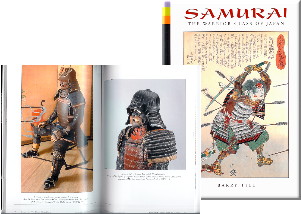
SAMURAI:
THE WARRIOR CLASS OF JAPAN
Barry Till (2003)
The history as told through arms, armor,
prints and a host of other objects celebrating the samurai.
This extensive exhibit catalog present the subject with a combination
of color and b&w plates each well documented and supported by a
historical survey in both English and French. Includes
glossary and bibliography. Printed in limited edition of 2000
copies.
96
pages, 6 x 9" soft cover |
 |
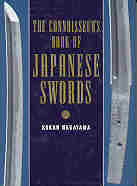
THE
CONNOISSEUR'S
BOOK OF JAPANESE SWORDS
(Token Kantei Dokuhon)
Kokan Nagayama, Translated by Kenji Mishina
Following an in-depth consideration of the history of the sword in
Japan, the five traditions of workmanship and some outstanding Edo
period examples, Nagayama's guide to sword appreciation expands on
criteria to judge sword quality, identify flaws, and ultimately make a
correct attribution. This ambitious guide includes an index and is
supported by 560 b&w illustrations.
256 pages, 71/2 x 101/8"
hardcover
|
 |
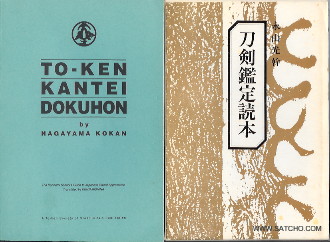
TOKEN
KANTEI DOKUHON and its
full ENGLISH
TRANSLATION as published by the Token Society
of Great Britain
Nagayama Kokan(1979), Translated by Kenji
Mishina
Following an in-depth consideration of the history of the sword in
Japan, the five traditions of workmanship and some outstanding Edo
period examples, Nagayama's guide to sword appreciation expands on
criteria to judge sword quality, identify flaws, and ultimately make a
correct attribution. This ambitious guide includes an index and is
supported by numerous b&w illustrations throughout.
Japanese Text: 383 pages, 5¼x7¾" cloth cover with slipcase
|
 |
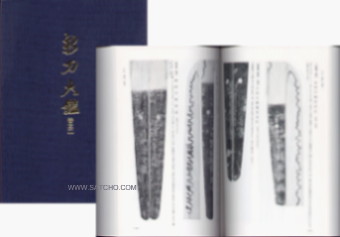
SHINTO
TAIKAN
IIMURA Yoshifume (1976)
The authoritative standard on Shinto period swords.
Japanese-language text with outstanding, large format
oshigata. The oshigata are accessible to English-readers as
Iimura's work has been included in the JSS/US Index to
Literature.
1,650 total pages, 8¾ x 11¾" two hardcover volumes, slipcased |
 |
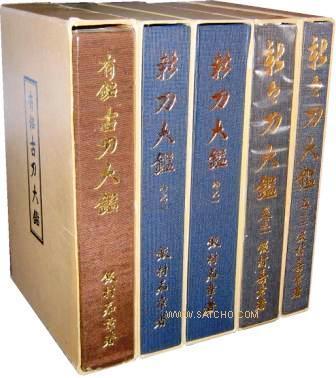 |
Also sold:
IIMURA's Yumei Koto
Taikan (1982)
IIMURA's Shinto Taikan (1976) two volumes
|
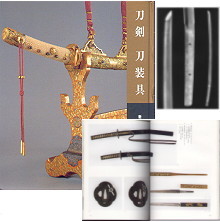
TOKEN TOSOGU:
Treasures from the Tokugawa Art Museum
Tokugawa Art Museum (1998, expanded/revised edition)
Catalog
of the Tokugawa Art Museum collection. The 240 examples
present important blades primarily of Juyo to National Treasure class
status (88 pages of oshigata), sword fittings, and koshirae (full
mounting) to include many daisho. Spectacular photography
throughout and printing on gloss stock -- all exhibits are shown in
color with the exception of the blades which are shown in b&w
as is traditional. This unprecedented collection of highest quality
works includes a complete English-language index of exhibits along with
descriptions making the content accessible to non-Japanese readers.
267 pages, 8½ x 10½" hardcover |
 |
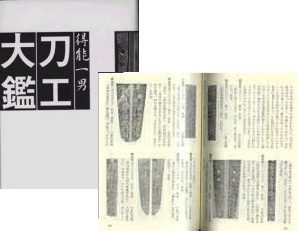
TOKO TAIKAN
TOKUNO Kazuo (2004)
The final edition of the classic Japanese-language sword
reference. It includes biographical information of the most
important smiths of the Koto through Gendai
periods and cites Yen values for comparison. The key feature of this
text that sets it apart from other works is that it also includes
thousands of oshigata for quick reference.
Hawley's Japanese Swordsmiths references to
oshigata found here.
794 pages, 5¼ x 7½" hardcover |
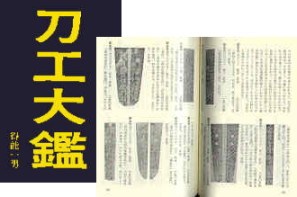
TOKO TAIKAN
TOKUNO Kazuo (1977)
Another classics Japanese-language sword reference;
this well know handbook is often seen at the side of many collectors on
the prowl. It includes biographical information of the most
important smiths of the Koto through Gendai
periods and cites Yen values for
comparison. The key feature of this text that sets it apart
from other works is that it also includes thousands of
oshigata for quick
reference. This
exact edition was used for Hawley's Japanese
Swordsmiths references to Tokuno's oshigata.
794 pages, 5¼ x 8½" hardcover |
 |
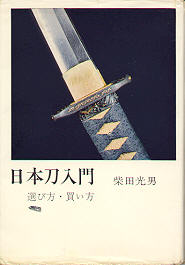
NIHONTO NYUMON
SHIBATA Mitsuo (1967)
Japanese-language handbook on
swords. This text is packed with oshigata (rubbings of sword
tangs with signatures) and informative illustrations. Many
examples of signature details also included for comparison.
This is the complement to a series of works by Shibata on a range of
related topics.
254 pages, 5¼ x 7½" hardcover w/dust jacket & plastic cover |
 |
|
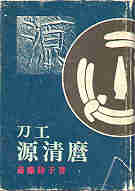
TOKO
MINOMOTO KIYOMARO (1964)
A Japanese-language reference on shinshinto smith
Minomoto (no) Kiyomaro. Includes 11 pages of oshigata
and extensive text.
432 pages, 5¼ x 7½" hardcover
|
 |
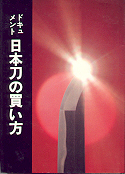
NIHONTO NO KAIKATA
Japanese-language handbook on swords. This informative text
was prepared as a "buyer's guide" for Japanese swords. The
first 65 pages illustrate an array of exemplary swords in the fashion
of Fujishiro's Nihon Toko Jiten, these are
presented on high quality gloss-stock. Many
additional oshigata and informative illustrations follow throughout the
ballance of the text.
290 pages, 6 x 7½" hardcover w/dust jacket |
 |
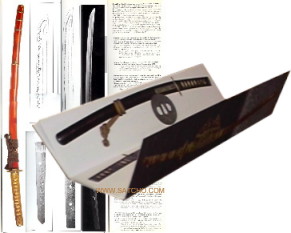
SABRES DU JAPON
Robert Burawoy Gallery (1993)
A uniquely designed exhibition
catalog of Japanese swords and koshirae that
makes use of its format to present stunning, large scale photography
and oshigata on pages that fold out to 13¾ x 19½ when opened.
French-language; includes glossary and bibliography of suggested
reading. Limited edition of 600 copies.
26
pages, 4½ x 19½" softcover |
 |
TOKEN YORAN
Iimura Yoshiaki
A Japanese language handbook that covers many aspects of swords,
including gendaito, and kodogu.
The AFU Quarterly (Fall #3) featured an extensive
article with an index to aid non-Japanese readers in using this text.
761 pgs, 4½ x 6" cloth soft cover |
 |
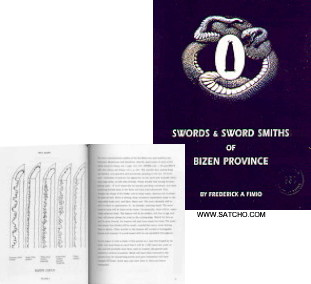
SWORDS & SWORD SMITHS OF BIZEN PROVINCE
Frederick Fimio (2001)
This book represents the only comprehensive work of its type in English
- a source book on Bizen swords produced during the Koto through Gendai
periods that draws on many scholarly references such as: Fujishiro's Nihon
Toko Jiten, NBTHK journals, the Nihonto
Koza, Hawley's Japanese Swordsmiths,
and many other well known titles. Starting with
an overview of the history and development of the swords produced in
the region, an extensive glossary, diagrams and twenty-three plates of
oshigata, the book's final synthesis is a 185-page annotated listing of
Bizen smiths that references back to the above, previously listed texts
and others while also adding the author's insight gained in 50-years
collecting experience during which time Bizen works had become the
focus of his studies. A helpful work for all students of
Bizen-to. Limited
printing of only 200 copies.
271 pages, 8¼ x 10¾" soft cover |
 |
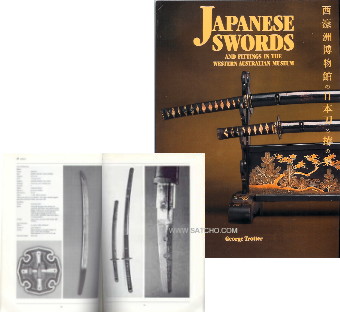
JAPANESE SWORDS
& FITTINGS IN THE WESTERN AUSTRALIAN MUSEUM
George Trotter (2002)
This text catalogs the museum's holdings with photographs and
descriptions provided for each piece. Swords are shown along
with their koshirae. The contents run a
broad range from mass-produced Showa period items
to also include many earlier works. 18 Color plates followed
by numerous b&w plates as shown here. A historical
overview, index of artists, table on Nengo
dates, and glossary are also provided.
131 pages, 8¼ x 11½" soft cover |
 |
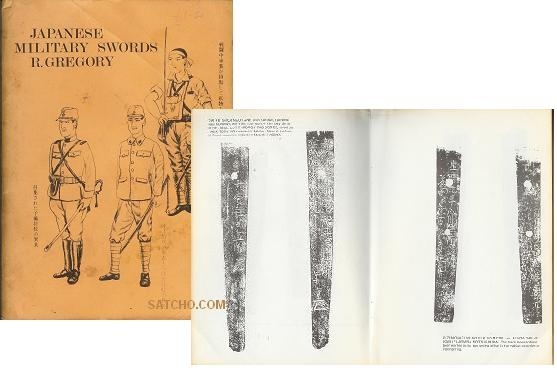
JAPANESE
MILITARY
SWORDS
R.Gregory (1971)
Predating joint efforts with Fuller, Gregory's monograph represents one
of the earliest western surveys on war period swords. This
seminal work includes a historical overview followed by a brief list of
mon, 19 pages of oshigata,
line drawings and photographs of koshirae and
tassles and sundries. A numbered collector's book.
57 pages, 6 x 8½" soft cover |
 |
THE PROCESS OF KANTEI:
STUDY, APPRAISAL, AND ATTRIBUTION OF NIHON-TO
B.W.Kowalski
This text overviews the criteria for sword evaluation. The appendix has
an excellent outline of the evolution of shape as it relates to
distinct periods, and also includes illustrations from the NTHK novice
course to demonstrate hamon variation and activity
found within, while also establishing a reference of classic styles by den.
18 pages, 8½ x 11" soft cover |
 |
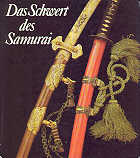
DAS SCHWERT DES SAMURAI
Lydia
Icke-Schwalbe (r.1990)
German-language
introductory text on swords and kodogu (fittings). The first section is text followed by 46 pages of plates in color and
b&w. The text addresses general history and nomenclature. Detailed
descriptions are included for each piece pictured.
95 pages, 7¾ x 8¾" hardcover |
 |
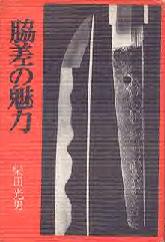
WAKIZASHI NO MIRYO KU
SHIBATA Mitsuo (1968)
This Japanese language text
is unique for its focus on wakizashi. It offers 128 pages of
photographic plates showing oshigata examples: nakago, full, and
detail.
237 pages, 4¼ x 7" hardcover |
 |
TOSHO
ZENSHU
Shimizu Osamu (1988)
A Japanese-language reference ranking 20,000 swordsmiths of the Koto
through Gendai periods. Similar to Hawley's Japanese Swordsmiths,
the sections on koto, shinto, shinshinto, and gendaito smiths note
where and when each smith worked, how they signed, and the relative
quality of their works. Additionally, the text is supported
by 17 pages of kokuho shown in b&w plates and an appendix
spanning a wide range of relevant study concerns.
714 pages, 6 x 8½" vinyl soft cover w/dust jacket, boxed |
 |
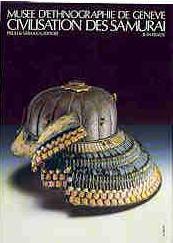
CIVILISATION DES SAMURAI
Musee D'Ethnographie De
Geneve (1991)
This French language text covers a broad range of arts related to the
samurai. 80 Large format color photographs accompanied by
descriptive information. Plates 42-72 are of particular interest to
students of arms & armor; includes: armor, swords,
yanone, naginata and other related items. The balance of the
book is concerned with prints, ningyo, and netsuke.
121 pages, 9½ x 13¼" hardcover, boxed |
 |
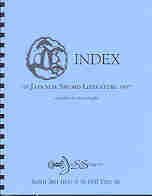
INDEX
OF JAPANESE SWORD LITERATURE
G.Doffin
A listing of sword smiths
indexed to the major references: Fujishiro, Ono, Sato, Suzuki, Tokuno,
Nihonto-Koza, Compton, and many others. This important reference allows
readers to locate source material for research.
177 pgs., 8½ x 11" spiral bound |
 |
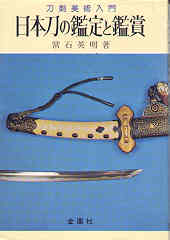
NIHONTO NO KANTEI TO KANSHO
Hideaki TSUNEISHI (r.1990)
Japanese-language manual for sword appreciation and
appraisal. Includes oshigata, diagrams, details on
smiths/schools, historical data, fold-out chart and index in Japanese.
341
pages, 5 x 7¼" soft cover w/dust jacket |
 |
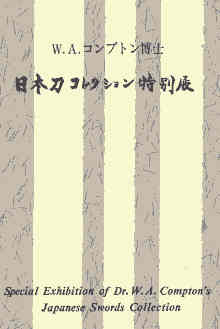
SPECIAL EXHIBITION OF DR. W. A.
COMPTON'S JAPANESE SWORD COLLECTION
Japanese language text with
English language forward. A very special and rare exhibit
catalog of the best of the collection as presented in Japan.
High quality, large-format detail photographs offer excellent research
material on these important pieces. All of the Compton books
are highly collectable. Here is an obscure offering to make
your Compton collection reference library complete.
24 pages, 8¼ x 11½" stiff Japanese paper cover |
 |
|
Return to the References Page.
|
|
|
|
|
|

203
Main Street, #245
Flemington, NJ 08822
U.S.A. |
phone:
fax:
e-mail:
|
1 (908) 397-9283
1 (914) 206-3562
books@satcho.com
Home |
 |
|
|
|
|